Timothée Chalamet: The Journey of a Soul Called to Give Form to Feeling.
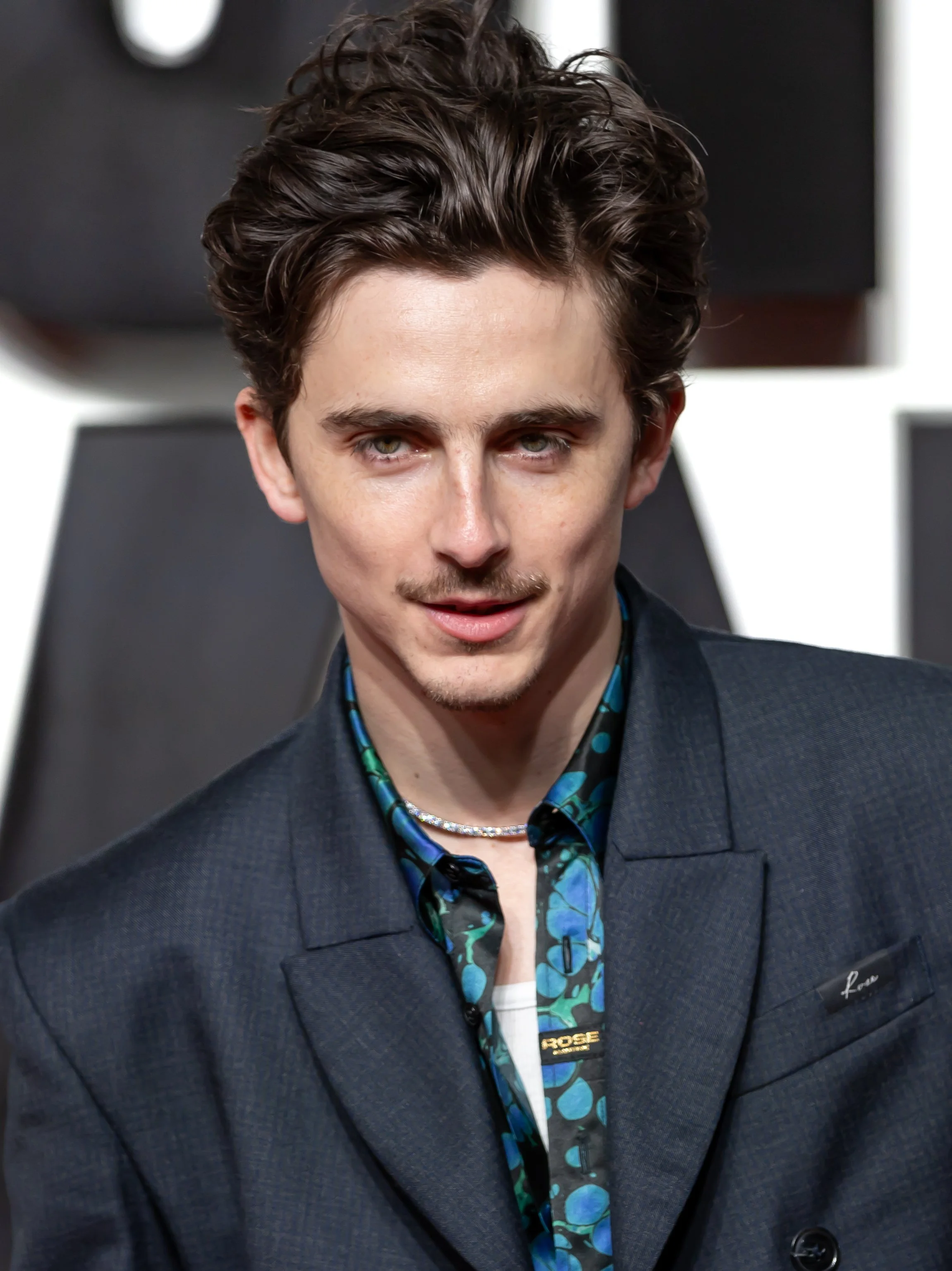
Some lives do not truly begin on the day of birth. They begin earlier, as an intention searching for its moment.
Timothée Hal Chalamet, born in New York on December 27, 1995, carries from the start a rare quality: he does not fully belong to a place, but to a state of being. Raised between two cultures American and French, structure and imagination, he developed early a sensitivity that is not merely emotional, but perceptive. It is as though he feels more than he speaks, and understands more than he shows.
In an ordinary biography, this would be a sociological detail. In his, it is the first sign of karma: a soul that has known more than one identity, now learning to live at the threshold between worlds, between selves, between becoming and being.
From childhood, Timothée enters the world of performance naturally. Not from ambition, but from familiarity. Acting does not appear as something to be learned, but as something to be remembered.
Those who watch him closely notice a particular quality: he does not “play” a character, he listens to it. This is the mark of karmic talent: an ability that does not arise from effort, but from a long inner history.
When, as a teenager, he appears in Homeland and Royal Pains, he is not seeking visibility. He is refining something subtler: the capacity to let another being live through him. This is what later makes his performances feel so unguarded, so real.
In 2017, with Call Me by Your Name, something shifts. Elio Perlman is not merely a role, he is a mirror. Through him, Timothée touches the core of his dharma: to give form to the awakening of the human heart. Vulnerability, desire, beauty and loss, all move through his face without resistance. There is no display, only presence.
That performance does not make him famous by chance. It makes him recognizable. Audiences sense something unacted, something lived.
His Academy Award nomination is not simply a professional milestone; it marks the emergence of a new archetype in contemporary cinema: the young man unafraid of tenderness, whose strength is emotional truth.
In the years that follow, Chalamet refuses a single path. He moves between intimate cinema (Beautiful Boy, Little Women, Bones and All) and modern myth (Dune). This is not strategy, it is karma.
Paul Atreides in Dune is not far from Elio. Both are young beings called to bear something larger than themselves. The scale changes, the essence does not.
In A Complete Unknown (2024), portraying Bob Dylan, Timothée faces one of his deepest karmic challenges: to inhabit a spirit that made freedom from definition its identity. Dylan is the archetype of the artist who belongs to no one, not even to himself.
Chalamet does not imitate him, he understands him. And through that understanding, he reveals the solitude, the brilliance, and the necessity of perpetual movement. For a moment, it is as though one restless soul finds a body that does not try to contain it.
With Marty Supreme (2025), where he acts and produces, a new phase emerges, the shift from talent to service. He is no longer only the actor who receives roles. He becomes the artist who chooses what enters the world. This is true dharma: not to shine, but to shape what did not exist before.
Timothée Chalamet did not become a star because Hollywood needed him. He became one because this era needed someone to embody a new masculine archetype:sensitive, poetic and inwardly awake.
His true role is not only on screen, it is in the way people, watching him, feel permitted to be more open, more vulnerable, more alive and in any biography of the soul, that is the sign that a dharma is being fulfilled.